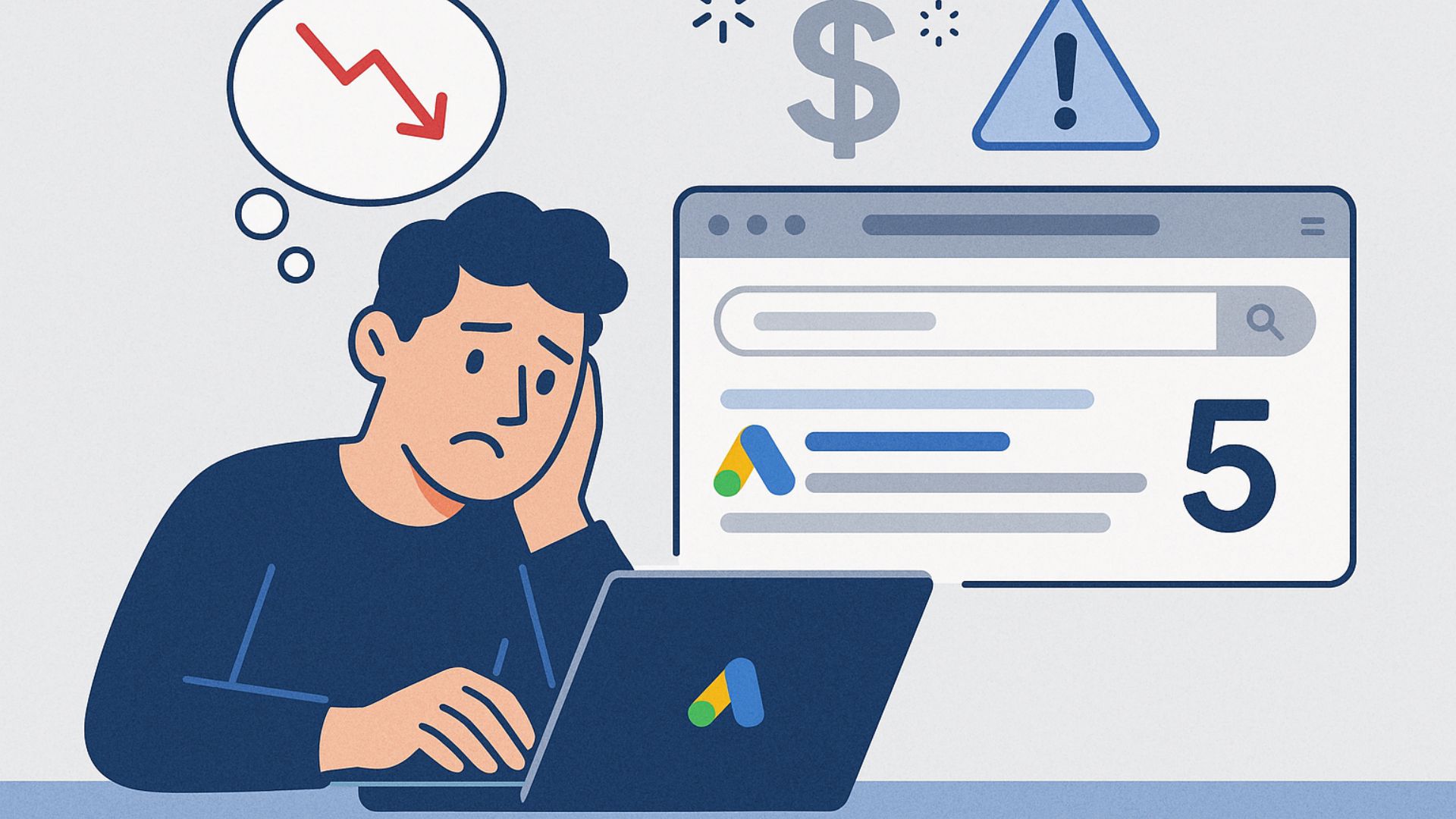
High bids alone don’t guarantee high ad rank in Google Ads. Your Quality Score, ad relevance, landing page experience, and expected click-through rate all matter. Improving these factors can help you compete more effectively, even without increasing your budget.
Why Is My Google Ads Ad Rank So Low Even with High Bids?

You’re bidding aggressively. Your cost-per-click is higher than competitors. But your ads still don’t show up high in the search results. What gives?
If your Google Ads ad rank is low despite high bids, the problem isn’t the amount of money you’re spending. Google doesn’t just reward the highest bidder. It rewards the most relevant, useful ad. Let’s break down what really affects your ad rank and how you can fix it.
1. Understanding Ad Rank
Ad Rank determines where your ad appears on the search results page (or if it shows at all). It’s calculated based on:
- Your bid
- Ad quality (Quality Score)
- Ad rank thresholds
- Search context (user’s device, location, time of day, etc.)
- Expected impact of ad extensions and formats
Even if your bid is high, you may not reach top positions if other signals are weak.
Google’s Ad Rank resource offers a breakdown.
2. Low Quality Score Is Dragging You Down
Quality Score is Google’s rating of the quality and relevance of your ads, keywords, and landing pages. It’s made up of:
- Expected CTR (click-through rate)
- Ad relevance
- Landing page experience
A poor score in any of these areas can significantly lower your Ad Rank, even if you’re bidding higher than competitors.
Fix it:
- Write more relevant, keyword-matched headlines
- Match your ad text to user search intent
- Ensure your landing page loads fast and matches the ad promise
A high Quality Score (8-10) means you can pay less and rank higher. Learn more about Quality Score improvement.
3. Poor Ad Relevance
Ad relevance measures how closely your ad matches the intent behind a user’s search. A mismatch here leads to a lower Ad Rank and wasted spend.
Fix it:
- Break large ad groups into tightly focused themes
- Use keywords in your ad headlines and descriptions
- Avoid stuffing keywords—aim for natural use
The more relevant your ads are, the more likely users are to click—helping you build a better Quality Score over time.
4. Weak Landing Page Experience
Your landing page needs to continue the conversation started by your ad. A bad experience can reduce your ad’s effectiveness and ranking.
Key elements Google looks for:
- Fast loading speed
- Mobile optimization
- Original, useful content
- Clear call-to-action
Fix it:
- Optimize loading times with compressed images and fast hosting
- Make your page responsive to all screen sizes
- Ensure content matches ad keywords and user expectations
Google tracks bounce rate and time-on-site, which influence how useful your landing page is.
5. Missing or Poor Ad Extensions
Ad extensions give users more ways to interact with your ad and provide more context to Google. They include sitelinks, callouts, structured snippets, price extensions, and more.
Fix it:
- Use every relevant ad extension for your business type
- Keep extension content fresh and aligned with campaign goals
- Test new formats regularly and monitor their performance
A well-structured ad with extensions often ranks higher because it looks more useful to users.
6. High Competition in Your Industry
In competitive niches like insurance, law, and software, it’s not unusual to see CPCs of $50+. Your high bid might still be lower than your competitors’.
But more importantly, they might be:
- Running ads with better Quality Scores
- Using more effective ad structures
- Driving better engagement metrics over time
Fix it:
- Continue improving Quality Score
- Focus on long-tail and lower-competition keywords
- Offer better value propositions in your ads
Strong competitors often have dedicated PPC teams constantly refining their campaigns. To stay ahead, constant improvement is key.
7. Ad Rank Thresholds Are Not Met
Google sets minimum thresholds your ad must meet to be shown in any position. These are dynamic and depend on things like keyword intent and industry.
If your ad doesn’t meet the threshold:
- It may not show at all
- It might only show at the bottom of the page
Fix it:
- Focus on Quality Score above all else
- Avoid overly broad or vague keyword targets
- Stick to well-organized, themed ad groups
Thresholds exist to ensure only high-quality ads appear for competitive search terms.
8. Smart Bidding May Limit Control
Using Smart Bidding strategies like Target CPA or Maximize Conversions gives Google control to adjust your bids. But this can also lead to:
- Lower bids in certain auctions
- Missed impressions due to Google deeming them unprofitable
Fix it:
- Review performance in campaign-level bidding strategy settings
- Use manual CPC if you need more visibility or control
- Combine automation with manual testing for best results
Smart Bidding works best with high-volume campaigns. If you don’t have enough data, it can misfire.
9. Your Account Lacks Historical Data
New Google Ads accounts or new campaigns don’t have historical performance. This makes it harder for Google to evaluate how trustworthy or relevant your ad is.
Fix it:
- Let campaigns run for a few weeks before making large adjustments
- Focus on improving CTR and conversion rate to build trust
- Keep testing creatives to find what resonates
Accounts with strong history often perform better even with lower bids.
What You Should Do Now:
- Audit your ad groups for keyword alignment
- Improve ad copy relevance and headline clarity
- Optimize your landing pages for speed and intent match
- Enable and refine all relevant ad extensions
- Switch from broad to phrase or exact match keywords
- Test and monitor Smart Bidding vs. Manual strategies
- Track Quality Score and improve your weakest areas
Internal Resource:
Visit our expert Google Ads discussions to learn how to boost your ad performance.
Final Thoughts

A high bid is just one piece of the puzzle. Google values usefulness, relevance, and overall experience. The more helpful your ad and landing page are to users, the better your Ad Rank—even if you’re not the highest bidder.
Focus on Quality Score, user intent, and structured campaigns. Over time, these factors will help you lower costs and improve visibility.
Need help reviewing your ad account? Socinova can audit your campaigns and guide you toward better performance.