

For a direct-to-consumer startup, the acquisition cost of a new customer is a sunk investment the moment they complete their first purchase.
Every dollar spent on paid ads, influencer seeding, and conversion optimization is only profitable if that customer comes back.
Yet most DTC brands obsess over the top of their funnel while treating the post-purchase relationship as an afterthought a confirmation email and a discount code for a second order.
In 2026, the brands with the lowest churn rates are not the ones with the most aggressive re-engagement sequences. They are the ones with the most active communities.
Daily community management the deliberate, human practice of responding, prompting, and nurturing conversation inside a brand’s owned social spaces has emerged as the single most reliable mechanism to convert a one-time buyer into a brand loyalist and dramatically cut churn for DTC startups.
The Churn Equation That Most DTC Startups Get Wrong
Churn, in the DTC context, is rarely the result of a bad product. It is almost always the result of a broken emotional contract. A customer buys into a brand’s story.
The product arrives, the experience is satisfactory, and then nothing. The brand disappears from the customer’s life until the next promotional blast lands in an already crowded inbox.
The customer did not leave because the product failed. They left because the brand never made them feel like they belonged to anything worth returning to.
This is the gap that daily community management closes.
When a customer posts a photo using your product and receives a genuine, personalized response within hours not a templated “Love this! 🙌” but an actual acknowledgment of their specific post the transactional relationship converts into a social one.
Social relationships are exponentially harder to churn out of.
The 24-Hour Response Window Is a Revenue Lever
The speed of a community response is not a customer service metric. It is a retention signal.
A customer who posts about your brand and receives a response within 24 hours is still within the emotional window of their purchase experience.
They are in the “advocacy phase” they are, at that moment, the most likely they will ever be to share, refer, and repeat-purchase.
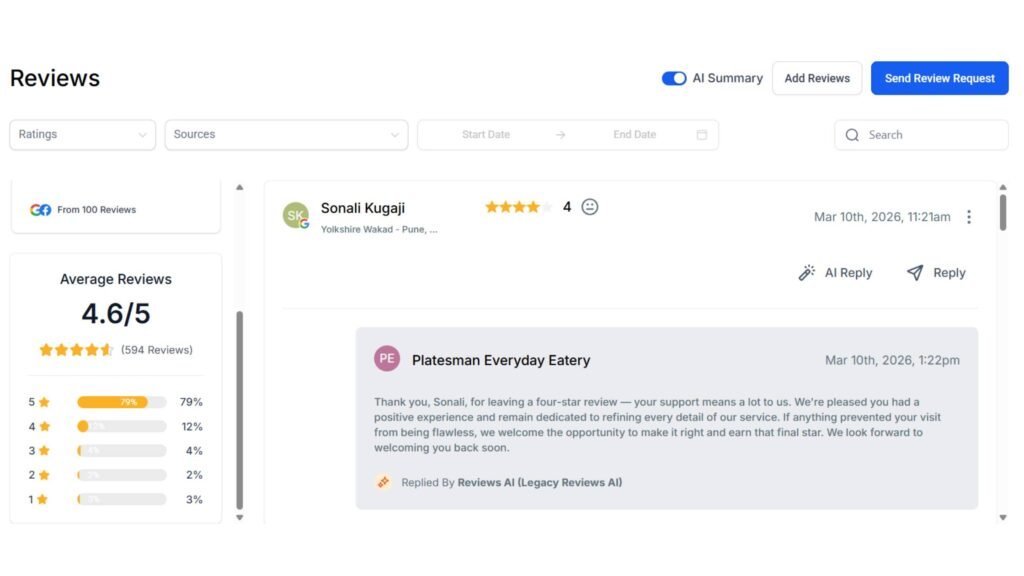
A response at that moment costs nothing and captures the full value of their enthusiasm.
A response that arrives 72 hours later or never lands after the window has closed.
The customer has moved on. The post sits unanswered, and to anyone in the brand’s community who sees it, the silence is a public statement about how much the brand values the people who buy from it.
Daily community management ensures that every single interaction in that 24-hour window is captured and converted.
Building a Sticky DTC Community Through Content Loops
The most sophisticated DTC brands treat their community not as an audience to broadcast to, but as a co-creator engine that generates its own retention content.
This is accomplished through deliberate content loops daily prompts, questions, and challenges that invite the community to participate rather than just consume:
- A skincare brand asks: “What’s your current Tuesday morning routine?” and reposts the best answer as a Story highlight.
- An apparel brand creates a weekly thread where customers tag their “outfit of the week” using the brand’s pieces.
- A specialty food brand runs a monthly community recipe contest, with the winning submission featured on a limited-run product label.
Each of these loops creates a feedback cycle where participation increases visibility, visibility attracts new members, and new members see an active, valued community reinforcing their own decision to stay.
The daily community manager is the engine that keeps these loops turning, and the compound effect on DTC churn reduction is measurable within a single quarter.
The “Known Customer” Effect on Lifetime Value
There is a fundamental difference between a customer who buys from a brand and a customer who is known by a brand. The first is a transaction. The second is a relationship.
When a community manager responds to a customer’s post by referencing something specific a goal they mentioned, a milestone they shared, or a question they asked weeks ago that customer’s likelihood of churning drops dramatically.
They are no longer buying from a store. They are buying from people who know them.
This “known customer” dynamic is the competitive moat that no acquisition budget can purchase. It is built exclusively through the repetitive, daily act of genuine human engagement and it compounds over time in a way that paid retargeting never will.
For DTC startups competing against legacy retail brands with larger budgets, it is one of the few asymmetric advantages available.
How Community Management Intercepts the Cancellation Moment
For DTC brands operating on a subscription model, churn prevention has a specific, high-stakes moment: the cancellation consideration.
A subscriber who is on the fence about cancelling rarely announces it in a support ticket.
They go quiet. Their engagement drops they stop commenting, stop opening emails, stop engaging with Stories. A community manager monitoring daily activity will notice this pattern before the customer acts on it.
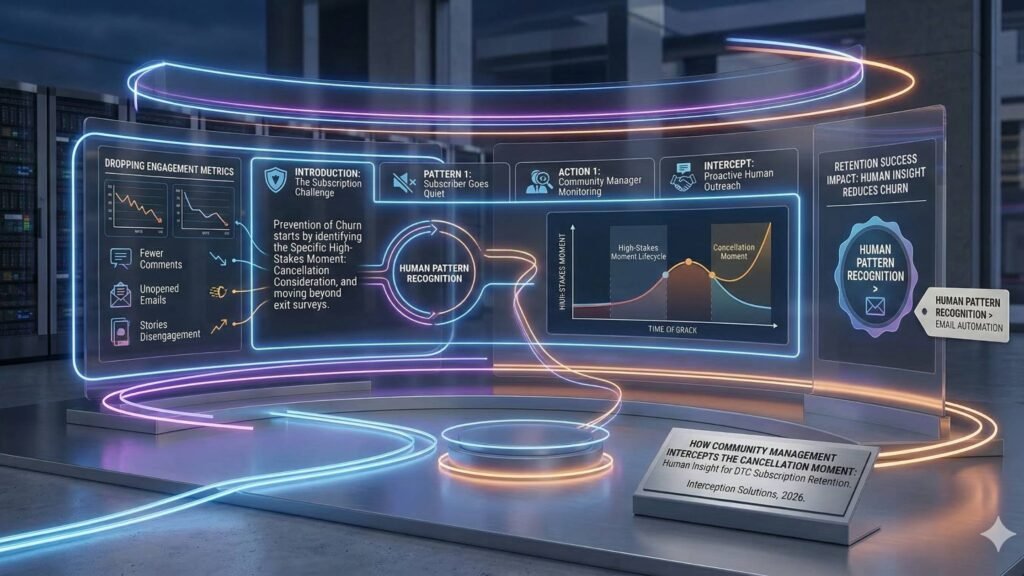
A proactive message a direct response to a comment, a personal mention in a community thread, or a timely “we noticed you’ve been quiet” outreach sent at this moment of disengagement can redirect the cancellation decision entirely.
This is not retention automation. It is human pattern recognition, and it works in a way that a trigger-based email sequence fundamentally cannot replicate.
From Churn Prevention to Organic Growth Engine
The most undervalued dimension of daily community management is the growth it generates as a byproduct of retention.
A customer who feels seen, heard, and valued inside a community does not just stay they recruit. They share. They answer other customers’ questions before the brand has to.
They become the social proof that lowers the acquisition cost of the next buyer.
For a DTC startup where every marketing dollar is scrutinized, this organic amplification effect is the difference between a sustainable growth model and a perpetual dependency on paid acquisition.
Daily community management is not a cost center. It is the highest-returning retention investment a DTC brand can make in 2026.
Are you ready to stop losing customers you already paid to acquire?
Book a free consultation call to get a complete Community Health Audit for your DTC brand. You will receive a detailed map of your current community engagement gaps, a 30-day rapid-response playbook tailored to your category, and a churn-risk identification framework to flag at-risk subscribers before they cancel entirely obligation-free.
– Blog written by Pranit Kamble