

For a local service business, every lead has a price. Whether that price is paid in time spent on cold outreach, money spent on print advertising, or commission surrendered to a lead aggregator, the cost per lead is the number that determines whether the business grows or simply stays busy.
Most local service businesses accept whatever cost per lead their current method produces because they have never been shown a better-engineered alternative.
In 2026, targeted Facebook Ads have become the most reliable mechanism for local service businesses to lower their cost per lead without reducing lead quality.
The platform’s combination of granular geographic targeting, behavioral audience data, and flexible creative formats allows a local plumber, landscaper, dental practice, or home renovation company to reach the exact household most likely to need their service, at the exact moment that need is highest, for a fraction of what traditional lead generation channels charge.
The businesses that understand how to use this system correctly are not just generating cheaper leads. They are generating better ones.
Why Most Local Businesses Are Overpaying for Every Lead They Get
The lead aggregator model that dominates local service industries is structurally designed to maximize the aggregator’s margin, not the business owner’s return.
A home services platform charges the same flat fee for a lead regardless of how qualified that lead is, how close the prospect is to making a decision, or how well the prospect’s needs match the business’s actual service offering.
The business owner pays for volume and hopes that conversion rate does the rest.
The result is a cost per lead that is artificially inflated by the aggregator’s overhead, shared with competing businesses bidding on the same prospect, and disconnected from any meaningful signal about the prospect’s intent or readiness.
Targeted Facebook Ads eliminate the intermediary entirely. The business owns the audience relationship, controls the message, sets the budget, and captures the lead directly.
There is no platform taking a margin between the ad spend and the conversion, and there is no competitor receiving the same lead simultaneously.
The economics are structurally superior from the first campaign.
The Geography and Timing Precision That Changes the Cost Equation
The defining advantage of Facebook Ads for local service businesses is not the creative format or the audience size.
It is the precision of the targeting, and specifically the combination of geographic precision with behavioral timing signals that no print or direct mail campaign can replicate.
A roofing company can serve ads exclusively to homeowners within a 15 mile radius of their operations who have shown recent interest in home improvement content.
A dental practice can target adults within a specific zip code who have recently moved to the area, catching them at the exact moment they are establishing new service relationships.
A pest control company can activate seasonal campaigns targeting households in specific neighborhoods immediately following the weather patterns that trigger infestation concerns.
Each of these targeting combinations reduces wasted impressions dramatically.
An ad that is only shown to the right person in the right geography at the right moment of behavioral readiness costs less to convert because it requires less repetition to move the prospect to action.
This is the mechanical reason why targeted Facebook Ads lower cost per lead. The audience is pre-qualified before the message is delivered.
Lead Form Ads and the Friction Elimination Effect
One of the most significant cost per lead reductions available to local service businesses on Facebook comes not from the targeting layer but from the ad format itself.
Facebook’s native Lead Generation Ad format allows a prospect to submit their contact information without ever leaving the platform, with their details pre-populated from their Facebook profile.
The friction elimination effect of this format is substantial. Every additional step between a prospect seeing an ad and submitting a lead form reduces the conversion rate.
A prospect who must click through to an external website, wait for a page to load, and manually fill in their details on a mobile device will abandon that process at a rate that makes the cost per lead of a non-optimized campaign significantly higher than it needs to be.
Local service businesses that switch from website-destination ads to native lead form ads typically see a 30 to 50 percent reduction in cost per lead within the first 30 days, not because the audience changed but because the path to conversion became frictionless.
The same ad spend generates more submissions because fewer prospects drop off before completing the action.
Lookalike Audiences Built From Real Customer Data
The most powerful cost per lead lever available to a local service business on Facebook is one that most businesses in this category never use: the custom audience upload and lookalike expansion model.
A business that has served 500 customers over the past three years holds an asset that most of them never monetize.
That customer list, when uploaded to Facebook’s Ads Manager, allows the platform to identify the demographic and behavioral characteristics shared by the business’s best customers and find new users within the target geography who match that profile with high statistical confidence.
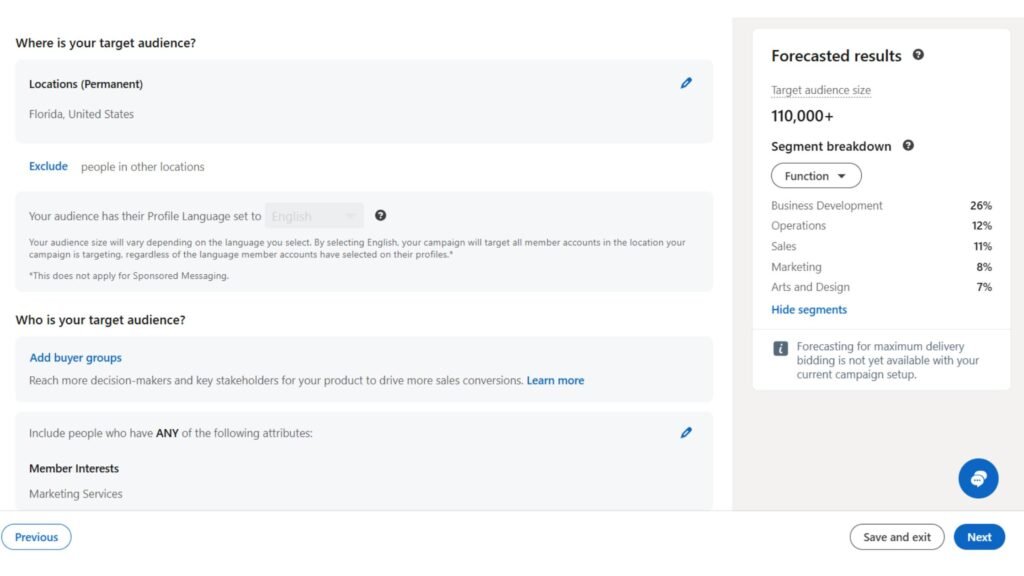
The result is a lookalike audience that is structurally more likely to convert than a broad interest-based audience, which means the cost per lead is lower from the moment the campaign launches.
The business is not paying to educate a cold audience about why they need the service. They are paying to reach people who already share the characteristics of those who have already bought.
For a local service business with even a modest customer history, this is the single highest-leverage move available in Facebook Ads, and it is available without any additional budget.
The Retargeting Layer That Captures Missed Conversions
Not every prospect converts on first contact.
A homeowner who sees an ad for a kitchen renovation company, clicks through to the website, browses the project gallery, and leaves without enquiring is not a lost lead. They are a warm prospect who needs one more touchpoint at the right moment.
Facebook’s retargeting capability allows a local service business to serve a follow-up ad specifically to that website visitor within the next 7 to 14 days.
This retargeted ad can be more specific than the original, referencing the exact service category they viewed, featuring a customer testimonial from a completed project in their neighborhood, or offering a limited-availability consultation slot to create a decision window.
Retargeted leads convert at a significantly higher rate than cold audience leads and cost a fraction of the price to generate, because the awareness and consideration work has already been done by the first ad.
A local service business that runs retargeting alongside their primary campaign effectively gets a second conversion opportunity from the same original ad spend, lowering the blended cost per lead across the entire campaign without increasing the budget.
Building a Predictable Lead Flow That Replaces Word of Mouth Dependency
The most dangerous growth model for a local service business is one that is entirely dependent on referrals.
Referrals are valuable, but they are unpredictable, unscalable, and impossible to accelerate when the business needs to fill capacity quickly.
Targeted Facebook Ads replace referral dependency with a system that produces a predictable, controllable volume of leads at a known cost.
When the business needs more leads, the budget is adjusted upward. When capacity is full, the campaign is paused. The business owner is no longer waiting for the phone to ring.
They are engineering their own demand, and the cost per lead is the dial that controls how aggressively they grow.
For local service businesses that have been told digital advertising is too expensive or too complicated for their category, the data in 2026 tells a different story.
The businesses that have built their lead generation on targeted Facebook Ads are not spending more than they were on aggregators and print.
They are spending less, converting more, and growing faster because they finally own the system that feeds them.
Schedule a consultation to find out exactly what a targeted Facebook Ads system would look like for your local service business. You will receive a full audit of your current lead generation cost structure, a custom audience map built around your existing customer base and service geography, and a 60 day campaign roadmap designed to lower your cost per lead from the first week of launch, entirely obligation-free.
– Blog written by Pranit Kamble