

For decades, the interior design industry has run almost exclusively on a single marketing channel: word-of-mouth.
A designer would complete a stunning kitchen remodel, the client would host a dinner party, and a friend would ask for the designer’s card.
While referrals are wonderful, they are inherently unpredictable.
A business cannot scale, forecast revenue, or comfortably hire new talent when its entire pipeline relies on hoping a past client mentions their name at a cocktail party.
In 2026, relying solely on referrals is a massive operational risk.
The most successful local design firms have realized that they need a predictable, scalable way to put their portfolios in front of the right homeowners.
This is why the industry is experiencing a massive shift toward Lead Generation Ads.
By combining high-end visual storytelling with hyper-local, data-driven targeting, interior designers are bypassing the slow referral loop and directly acquiring high-budget local contracts.
The Psychology of the Visual Hook
Interior design is not a utility; it is a highly emotional, luxury purchase.
Homeowners are not just buying furniture or floor plans they are buying a better version of their daily lives.
They are buying the feeling of hosting a holiday in a flawless dining room or waking up in a serene, resort-style master suite.
Lead Generation Ads, particularly on visually driven platforms like Instagram, Pinterest, and Facebook, capitalize perfectly on this psychology.
When a homeowner is scrolling through their feed and suddenly sees a high-definition video tour of a transformed local living room, the emotional hook is set.
The “Before and After” carousel format is particularly devastating in this space. It visually proves competence in three seconds.
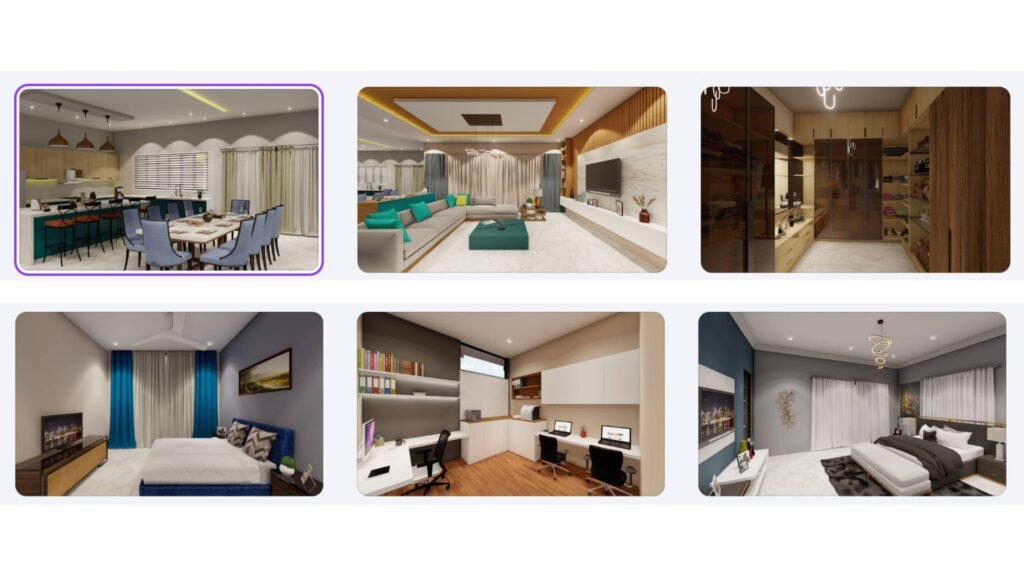
The ad does not need to use aggressive sales copy; the portfolio itself does the selling, creating instant aspiration and desire.
Hyper-Local, High-Net-Worth Targeting
The biggest challenge for an interior designer isn’t finding people who like beautiful homes; it is finding people who can actually afford to pay for one within a specific geographic radius.
A viral Instagram Reel that gets a million views in another country does absolutely nothing for a designer whose operations are strictly based in a single metropolitan area.
Lead Generation Ads solve this geographic limitation through surgical precision.
Modern ad platforms allow designers to draw a strict 15-mile radius around their ideal neighborhoods.
But the targeting goes deeper than zip codes. The architecture of these campaigns allows for layering behavioral and financial indicators.
The ads are only shown to users within that radius who are actively browsing luxury real estate listings, interacting with high-end architectural publications, or showing digital behavior consistent with recent home purchases.
The budget is never wasted on casual dreamers; it is spent exclusively on local, high-net-worth individuals who are currently in the market for a transformation.
Removing the Friction: Why Native Forms Win
A critical distinction must be made between a standard traffic ad and a “Lead Generation Ad.” Historically, designers would run an ad that clicked through to the “Contact” page on their website.
If the website loaded slowly, or if the user was forced to pinch and zoom on their phone to fill out a clunky, multi-step questionnaire, they would abandon the page. The designer paid for the click but lost the contract.
Lead Generation Ads eliminate this friction entirely by utilizing native, in-platform forms.
When a homeowner is captivated by a design ad on Facebook or Instagram and taps “Get a Quote” or “Book a Consultation,” a sleek form pops up instantly without them ever leaving the app.
Crucially, their name, email, and phone number are already auto-filled by the platform based on their profile data. They can submit their inquiry with two taps.
By removing the technical friction between the impulse and the action, the volume of high-quality local inquiries skyrockets.
The Omnipresent Paid Media Ecosystem
To dominate a local market, top-tier design firms utilize a dual-platform approach, leveraging both Meta (Facebook/Instagram) and Google Ads to cover the entire buyer’s journey.
Capturing Demand with Google Ads
When a homeowner actively types “modern interior designer near me” or “kitchen renovation specialist [City Name]” into Google, they are holding a blank check.
Google Ads are used to capture this existing, bottom-of-the-funnel demand.
By bidding on these exact, high-intent local keywords, a design firm ensures they are the very first name the homeowner sees at the exact moment they are ready to hire.
Creating Demand and Retargeting with Meta
While Google captures the people who are ready right now, Meta creates demand among those who didn’t even know they were ready.
Meta Ads put breathtaking design concepts in front of targeted homeowners, planting the seed of a renovation.
Furthermore, Meta’s pixel tracking allows for aggressive retargeting. If a user clicks a Google Ad, browses the designer’s portfolio, but leaves without booking a call, Meta Ads will track them.
Over the next two weeks, that user will see client testimonials, 3D renderings, and press features in their social feeds.
This omnipresent retargeting builds massive trust, ensuring that when the homeowner finally decides to pull the trigger, that specific designer is the only logical choice.
The Predictable Pipeline
Transitioning from a referral-only model to a paid acquisition model fundamentally changes the valuation and stability of an interior design business.
It turns marketing from a passive waiting game into an active, controllable lever.
By putting the right visuals in front of the right local homeowners with zero friction, Lead Generation Ads ensure the drafting table is never empty.
Are you ready to stop waiting for referrals and start building a predictable pipeline of high-budget local design projects?
Book a free consultation call to discuss a custom Local Acquisition Audit tailored to your specific design firm. You will get a clear breakdown of the exact audience targeting available in your zip codes, along with a step-by-step blueprint to implement frictionless lead forms—completely obligation-free.
– Blog written by Pranit Kamble