
In the local fitness market, the “Search” phase of the customer journey is almost entirely dictated by social proof.
When a potential member types “gyms near me,” “best yoga studio,” or “crossfit box [City Name]” into Google, they aren’t just looking for a list of addresses; they are looking for a reason to choose one over a dozen others.
Google’s local algorithm is ruthlessly efficient at identifying which fitness centers are the most active, reliable, and well-regarded in their community.
For fitness centers in 2026, the volume, frequency, and sentiment of Google Reviews are the most powerful ranking signals available.
However, relying on front-desk staff to manually ask for reviews is a recipe for stagnation.
Implementing a Review Automation system is no longer a luxury; it is the fundamental infrastructure required to dominate Local Search SEO and ensure your facility is the undisputed first choice for every local searcher.
The “Velocity” Signal: Why Recency Matters More Than Total Count
Most fitness center owners focus on their total number of reviews.
While a high total is impressive, Google’s local algorithm prioritizes Review Velocity the speed and consistency at which new reviews are being posted.
A gym with 500 reviews from two years ago will often be outranked by a studio with 150 reviews that are being added at a rate of three to five per week.
Automated systems ensure that this velocity never dips.
By integrating with the gym’s member management software, the system triggers a review request via SMS or email immediately after a “moment of delight,” such as a member completing their tenth class, achieving a personal best, or finishing a transformation challenge.
This constant drip of fresh content tells Google that your business is highly relevant and currently active, which is the fastest way to climb into the coveted “Map Pack” (the top three local listings).
SEO Weight: The Hidden Value of Review Keywords
Reviews are more than just stars; they are a goldmine of User-Generated Content (UGC) that search engines use to understand your specific services.
When a member leaves a review that says, “Best HIIT classes in [City]” or “The personal trainers here really helped me with weight loss,” they are providing Google with hyper-relevant keywords that the business itself cannot naturally repeat as effectively.
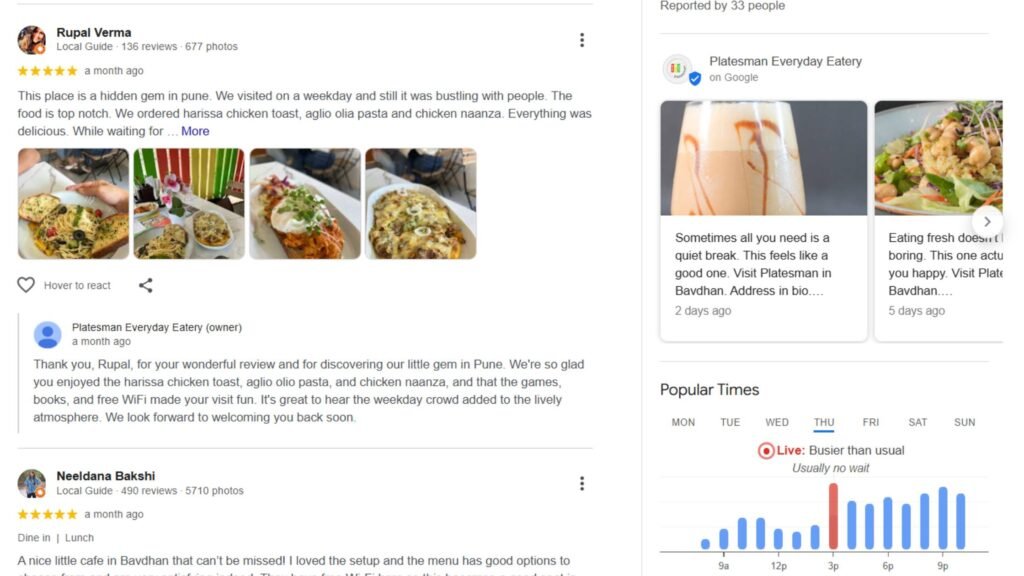
Review automation systems often include subtle “prompting” that encourages members to mention specific services or coaches.
When your Google listing is flooded with reviews containing high-intent keywords like “clean facilities,” “strength training,” or “community atmosphere,” Google associates your business with those specific search terms.
This broadens your “search footprint,” allowing you to rank for hundreds of different long-tail keywords that drive high-intent local traffic directly to your website.
Neutralizing the “Silent Majority” and Managing Negative Feedback
One of the biggest risks to a local fitness center is the “vocal minority”—the rare unhappy member who is highly motivated to leave a one-star review.
Meanwhile, the “silent majority” of happy members often forget to leave feedback simply because there is no friction-free way to do it.
Automation levels the playing field.
By systematically asking every member for feedback, the sheer volume of positive four and five-star reviews naturally dilutes the impact of the occasional outlier.
Furthermore, sophisticated automation systems include a “Internal Feedback Loop.”
If a member indicates they had a sub-par experience within the automated form, the system can route that message directly to management before it becomes a public review.
This allows the business to resolve the issue privately, turning a potential one-star public disaster into a positive, private customer service win.
The Paid Ads Multiplier: Boosting Trust and Lowering CPC
The impact of review automation extends directly into your paid acquisition strategy.
When running Google Ads or Meta Ads to drive new memberships, your “Star Rating” is the first thing a prospect sees.
Google Local Services Ads (LSAs)
For fitness centers using Local Services Ads, the review count and rating are the primary drivers of the ad’s position.
A center with an automated review system will naturally have a higher “Trust Score” in the eyes of Google’s ad algorithm. This leads to a higher Click-Through Rate (CTR) and a lower Cost-Per-Click (CPC).
You are effectively paying less for a lead than your competitors because your automated reputation proves you are the safer bet.
Meta Ads Retargeting with Social Proof
On Meta (Facebook and Instagram), reviews captured through automation can be recycled into high-converting ad creative.
Instead of a generic ad that says “Join Our Gym,” the automation system allows you to pull a fresh, five-star quote from a member who joined last week and turn it into a sponsored testimonial.
Seeing a real neighbor praise a specific trainer or class creates a level of authenticity that high-budget professional photography simply cannot match.
Turning Reputation into a Scalable Asset
In a local market, your reputation is your revenue. A fitness center that leaves its Google Reviews to chance is leaving its growth to chance.
By implementing a review automation infrastructure, you turn your satisfied members into a 24/7 marketing department.
You ensure that when the next local lead looks for a place to train, the choice is already made before they even finish their search.
Are you ready to claim the #1 spot in your local search results and stay there?
Book a free consultation call to discuss a custom Local Search & Reputation Audit for your fitness center.
You will get a detailed breakdown of your current ranking gaps, a “Keyword Map” of what your members are (and aren’t) saying about you, and a 90-day blueprint to automate your social proof and dominate your local market—completely obligation-free.
– Blog written by Pranit Kamble