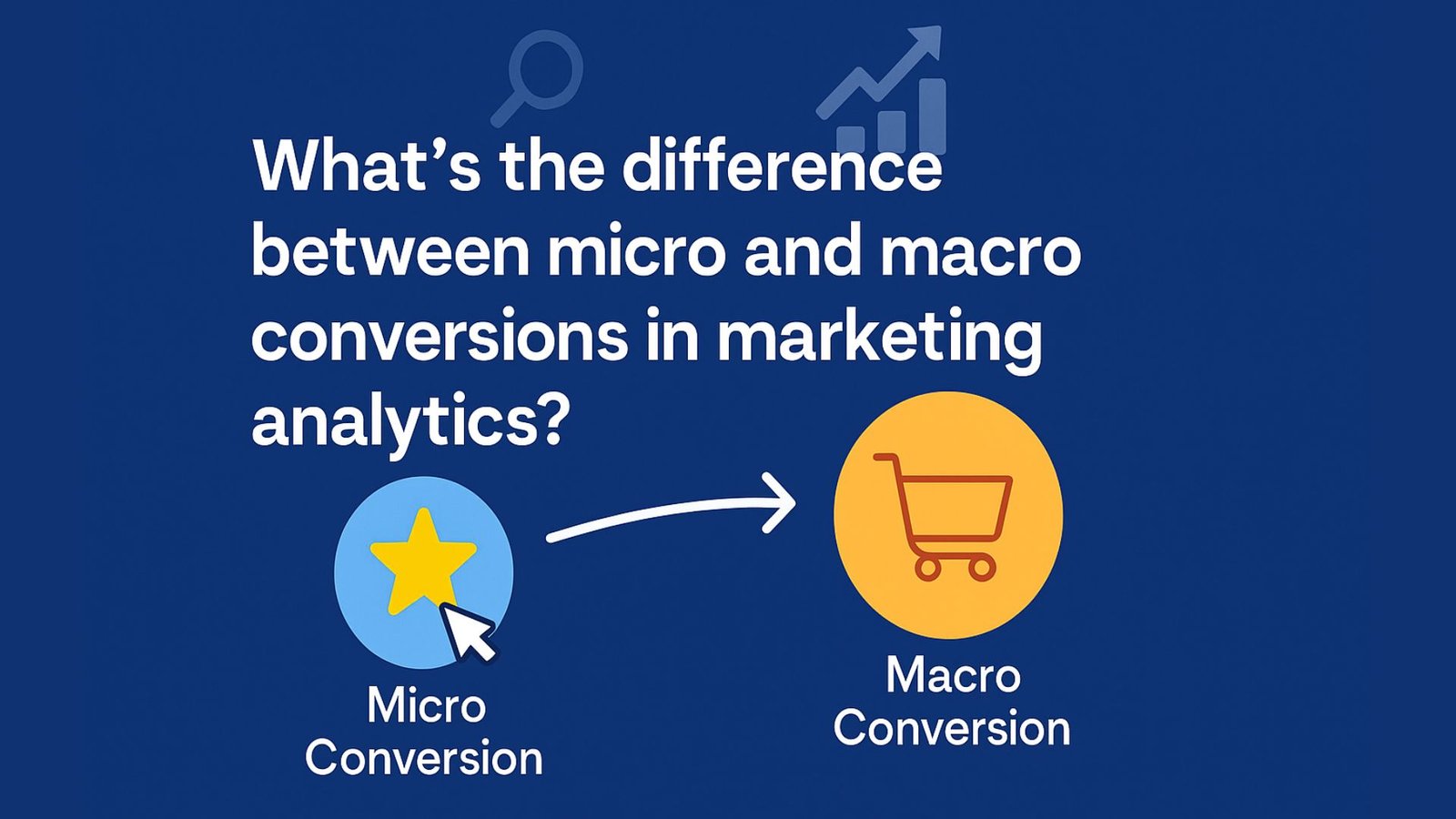
Micro and macro conversions reflect different stages of the customer journey. While macro conversions capture your ultimate business goals, micro conversions reveal valuable user actions leading to those goals. Analyzing both lets marketers improve funnel efficiency, ad targeting, UX, and long-term ROI.
What’s the Difference Between Micro and Macro Conversions in Marketing Analytics?
In digital marketing analytics, understanding the difference between micro and macro conversions is essential for optimizing both user experience and business outcomes.
These two types of conversions serve as complementary indicators—macro conversions reflect the success of your core objectives, while micro conversions show whether users are moving toward those goals.
Let’s explore their definitions, real examples, measurement strategies, and how this distinction can fuel smarter marketing decisions.
What Is a Micro Conversion?
Micro conversions are smaller, trackable interactions that indicate a user’s engagement, interest, or progress toward a macro conversion.
Examples:
- Clicking “Add to Cart” or “View Pricing”
- Signing up for a newsletter
- Downloading a lead magnet (eBook, checklist)
- Watching a product demo video
- Engaging with a chatbot or live chat
- Spending more than 3 minutes on a page
These don’t deliver immediate revenue—but they reveal intent signals that help marketers understand how users interact with their content and offers.
Why They Matter:
- They provide diagnostic insights into your funnel.
- They show drop-off points before macro conversion.
- They help retarget warm audiences (e.g., cart abandoners, video watchers).
- They guide UX improvements and landing page optimization.
What Is a Macro Conversion?
Macro conversions are your website or campaign’s primary goals—the end actions that directly drive business value.
Examples:
- A customer making a purchase on an e-commerce site
- A user submitting a lead generation form
- A prospect scheduling a consultation call
- A subscriber enrolling in a paid membership or course
These conversions are easy to quantify and usually align directly with your KPIs or revenue goals.
In tools like Google Analytics, Meta Ads, or Google Ads, macro conversions are often set as primary goals or tracked using conversion tags.
Why They Matter:
- They represent completed sales or leads
- They’re the basis for Return on Ad Spend (ROAS) and Cost Per Conversion
- They inform budget allocation and top-level campaign performance
Micro vs Macro Conversion: Key Differences
| Aspect | Micro Conversion | Macro Conversion |
|---|---|---|
| Definition | Small interactions indicating user intent | Final action aligned with business goal |
| Purpose | Diagnose funnel issues, segment user behavior | Measure success, calculate ROI |
| Value | Indirect but predictive | Direct revenue/lead generation |
| Examples | Email signups, scroll depth, demo views | Purchase, form submission, booking |
| Optimization Use | UX, content, remarketing strategies | Ad performance, cost control |
How to Track Both in Analytics Platforms?
Google Analytics 4 (GA4)
- Macro conversions: Set up events and mark key ones as conversions.
- Micro conversions: Track as events—such as button clicks, video engagement, form interactions.
Meta Ads Manager
- Macro: “Purchase” or “Lead” as conversions.
- Micro: AddToCart, PageView, or Lead Magnet Downloads.
Google Ads
Use conversion actions with different values: one for macro (e.g., high-value lead) and another for micro (e.g., visit to contact page).
CRM & Marketing Automation Tools
Platforms like HubSpot or GoHighLevel can map both types:
- Tag contacts based on micro conversions (email clicks, downloads)
- Trigger workflows when a macro conversion happens (deal won, signup)
Why Understanding Both Is Crucial?
1. Funnel Optimization
- Tracking just macro conversions gives a binary view—converted or not.
- Tracking micro conversions tells you why people didn’t convert (e.g., bounced after product page).
2. Better Retargeting
- Users who watch your video or click “pricing” are warmer than casual browsers.
- Set up remarketing campaigns based on these actions.
3. Budget Efficiency
Allocate ad spend where micro conversions are high but macro isn’t—indicating potential with better UX or trust-building.
4. Content Strategy
See which blog posts or pages drive email signups or product views (micro) even if they don’t directly lead to sales.
Tools to Track Micro and Macro Conversions
- GA4: Set up events and conversions for both micro (scroll depth, clicks) and macro (form submissions, purchases).
- Hotjar / Clarity: Visualize user behavior via session recordings.
- HubSpot / Salesforce: Map customer journey touchpoints and lead scores.
- Meta Pixel / Google Ads Conversion Tracking: Align campaign data with on-site behaviors.
Common Mistakes to Avoid
- Only tracking macro conversions: You miss out on funnel insights.
- No attribution for micro events: You can’t connect the dots between interest and action.
- Failing to define clear goals: Your analytics reports become noise.
Real-World Example
Let’s say you’re running Facebook Ads for a SaaS product.
- Macro conversion = Free Trial Sign-Up
- Micro conversions = Clicking “See Plans”, Watching demo video, Visiting pricing page
Tracking just the macro gives you binary insight (converted or not). But micro conversions help you identify drop-off points and retarget users more strategically.
How Socinova Can Help?
At Socinova, we help businesses set up end-to-end funnel analytics—from micro conversion tracking in GA4 to optimizing ad campaigns based on real behavior data. Whether you’re struggling with low conversions or unclear attribution, our team ensures you gain visibility into every step of your customer journey. Explore our analytics setup services
Final Thoughts
Both micro and macro conversions matter—and they work best together.
Macro conversions tell you what worked; micro conversions tell you why or why not. If you’re not tracking both, you’re flying blind with only the destination in view, not the journey.
Want help mapping your conversion journey across the funnel? Let’s talk.