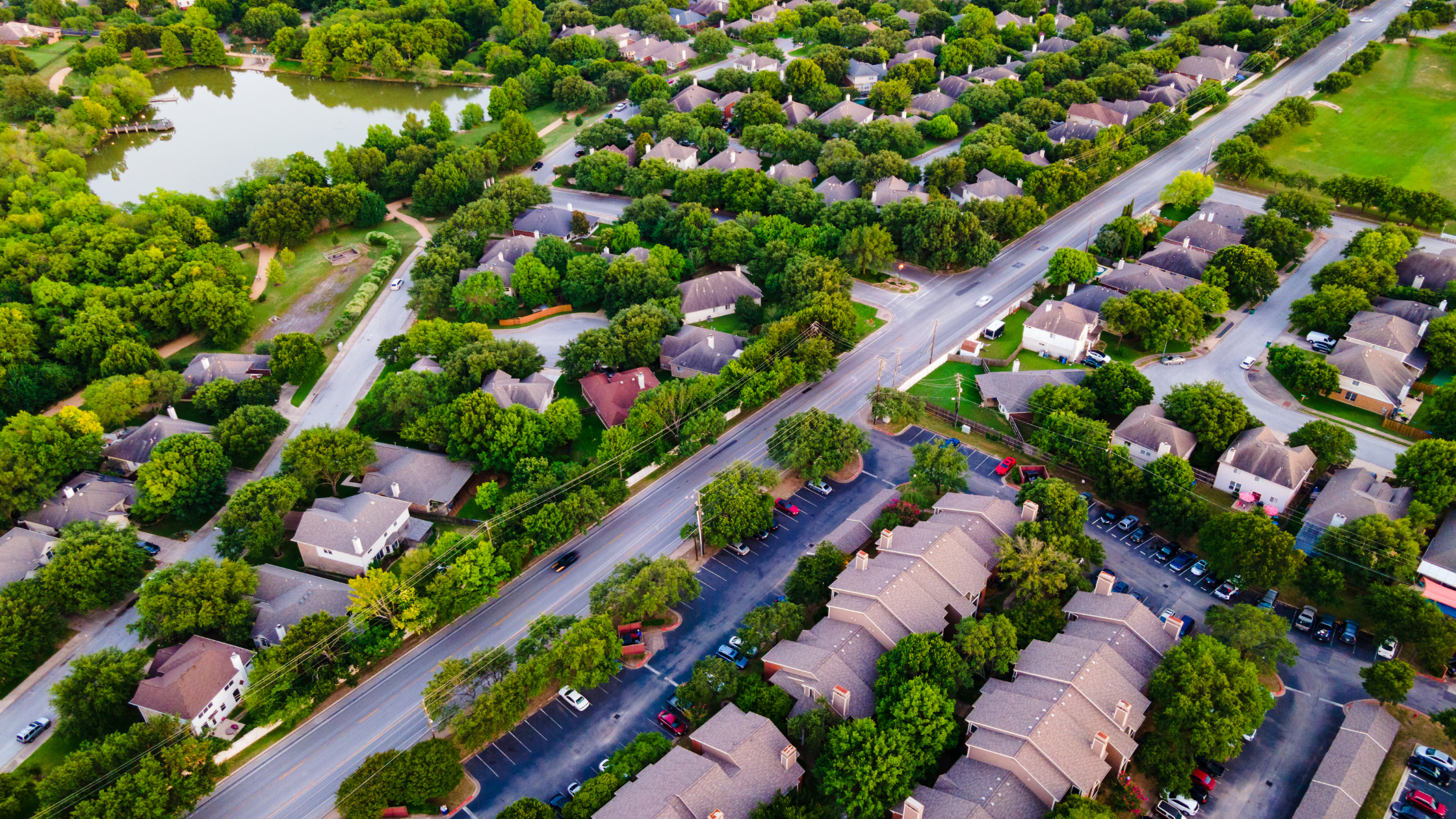

A buyer rarely chooses a home based on the property alone. The surrounding neighborhood can influence the decision just as much as bedrooms, bathrooms, square footage, or finishes.
Buyers want to understand what everyday life could look like. They may research nearby parks, restaurants, shopping, commute options, recreation, walkability, housing styles, and the overall character of an area before deciding whether to schedule a showing.
Recent National Association of REALTORS® research reinforces this point. In its 2025 Profile of Home Buyers and Sellers, 59% of buyers identified neighborhood quality as an important factor, while 47% cited convenience to friends and family.
This creates a specific marketing opportunity for real estate professionals.
How do neighborhood spotlight posts attract buyers for realtors?
Neighborhood spotlight posts attract buyers by turning an unfamiliar location into a tangible lifestyle. Instead of promoting individual listings alone, realtors can demonstrate local expertise, answer location-related questions, and help prospective buyers identify communities that fit their priorities.
Using neighborhood content consistently can therefore generate attention before a buyer is ready to inquire about a specific property.
Direct Answer: How Do Neighborhood Spotlights Generate Buyer Interest?
Neighborhood spotlight posts attract buyers by showing what living in a specific area could actually be like, while positioning the realtor as a knowledgeable local resource who can help buyers choose both the right home and the right location.
A strong spotlight can introduce:
- Parks and recreation
- Restaurants and cafés
- Shopping areas
- Housing styles
- Transportation options
- Community events
- Local businesses
- Market trends
- Walkability and amenities
This information addresses questions buyers are already asking during their research.
The strategy is particularly relevant because agents continue to play a central role in the purchase process. NAR reports that 88% of recent buyers purchased through a real estate agent or broker. More than half also valued agents pointing out property features or flaws they had not noticed themselves.
Neighborhood posts extend that advisory role to social media.
Instead of saying, “I know this market,” the realtor demonstrates that knowledge repeatedly.
Step-by-Step: How Realtors Can Use Neighborhood Spotlight Posts
Step 1: Choose Neighborhoods Based on Buyer Intent
Do not select communities simply because they are popular.
Start with the buyers you want to reach.
For example, a realtor working with professionals may highlight areas offering convenient transportation, restaurants, entertainment, and low-maintenance housing.
A realtor working with downsizers might focus on communities with nearby services, accessible amenities, smaller homes, or condominium options.
This makes every neighborhood spotlight more targeted.
Recent NAR research also shows that location priorities are changing. Convenience to a buyer’s job was cited by 31% of buyers in its 2025 report, compared with 52% in 2014.
Realtors should therefore avoid assuming commute time is always the dominant selling point. Lifestyle, relationships, amenities, and neighborhood quality may deserve equal or greater attention.
Step 2: Sell the Lifestyle Without Overselling It
A neighborhood spotlight should help buyers picture a normal day.
Instead of:
“Beautiful neighborhood with amazing amenities.”
Create content such as:
“Start Saturday at the neighborhood coffee shop, walk to the nearby park, visit the local market, then reach the restaurant district within minutes.”
The second version gives buyers something concrete to imagine.
This approach becomes particularly powerful when paired with photographs or short-form video.
Show the streets.
Show the businesses.
Show public spaces.
Show what makes the area recognizable.
The goal is to make an online viewer feel as though they have already started exploring the neighborhood.
Step 3: Spotlight Local Businesses
Local businesses can make neighborhood content considerably more interesting than another property-focused post.
Feature:
- Coffee shops
- Restaurants
- Bakeries
- Fitness studios
- Boutiques
- Markets
- Entertainment venues
Tag the featured businesses where appropriate.
This can introduce the post to audiences beyond the realtor’s existing followers, particularly when the business engages with or shares the content.
It also changes the realtor’s positioning.
The account becomes a resource for discovering the community rather than simply a feed of available properties.
Step 4: Turn Buyer Questions Into Neighborhood Content
Realtors hear location questions constantly.
Use those questions as content ideas.
Examples include:
“Where can I find homes close to restaurants and shopping?”
“Which neighborhoods have more outdoor recreation nearby?”
“Where are newer townhomes being built?”
“Which areas offer larger lots?”
Each question can become a targeted neighborhood spotlight.
This creates content around actual buyer intent rather than generic social media topics.
It can also generate more qualified conversations because viewers can identify themselves with the problem being discussed.
Step 5: Use Data to Strengthen Neighborhood Spotlights
Lifestyle content attracts attention, but data can increase credibility.
Depending on the market and available reliable information, a realtor could include:
- Median sale price
- Typical property types
- Recent inventory
- Average days on market
- Price trends
- New development activity
For example, NAR reported in February 2026 that home prices had increased year over year in 73% of the metro markets it tracked during Q4 2025, demonstrating how significantly market conditions can vary by location.
The important point is to use current local data rather than broad national statistics when discussing a specific neighborhood.
A spotlight could combine a lifestyle hook with a concise market snapshot, then direct interested buyers toward a more detailed market report.
Step 6: Highlight Walkability and Everyday Convenience
Neighborhood spotlights should not focus exclusively on houses.
In July 2026, NAR reported that Americans place meaningful value on walkability and access to destinations such as parks, shops, restaurants, schools, and workplaces.
A realtor could therefore create content such as:
“What can you walk to from this neighborhood?”
The post could visually map nearby destinations and demonstrate how residents might experience the area.
This makes an abstract feature like “great location” much more specific.
Be careful to use objective, verifiable information and comply with fair housing requirements when describing communities.
Step 7: Use AI to Scale Neighborhood Research and Content Planning
AI can make neighborhood content production more efficient, but it should support rather than replace local expertise.
For example, AI can help organize:
- Common buyer questions
- Content themes
- Search terms
- Engagement data
- Market reports
- Video scripts
- Multiple post variations
McKinsey estimates that generative AI could create productivity value equivalent to 5% to 15% of marketing spending, including through content creation, personalization, and customer insights.
Realtors could use AI to identify that first-time buyers engage most with affordability content while downsizers respond more strongly to convenience and low-maintenance living.
Different neighborhood spotlights could then emphasize different features.
AI should not invent neighborhood facts, market statistics, commute times, or local claims. Those details should always be verified against reliable sources.
Step 8: Give Buyers a Clear Next Step
A neighborhood post should not end with information alone.
Give interested buyers a logical next action.
For example:
“Want to see what is currently available in this neighborhood? Message me for the latest listings.”
Other CTAs could promote:
- Neighborhood property alerts
- Local market reports
- Private showings
- Buyer consultations
- Relocation guides
- New listing notifications
The transition should feel helpful rather than aggressive.
A viewer who has just spent two minutes learning about a community may not be ready to buy, but they may be ready to receive relevant listings.
Supporting Data and Real-World Examples
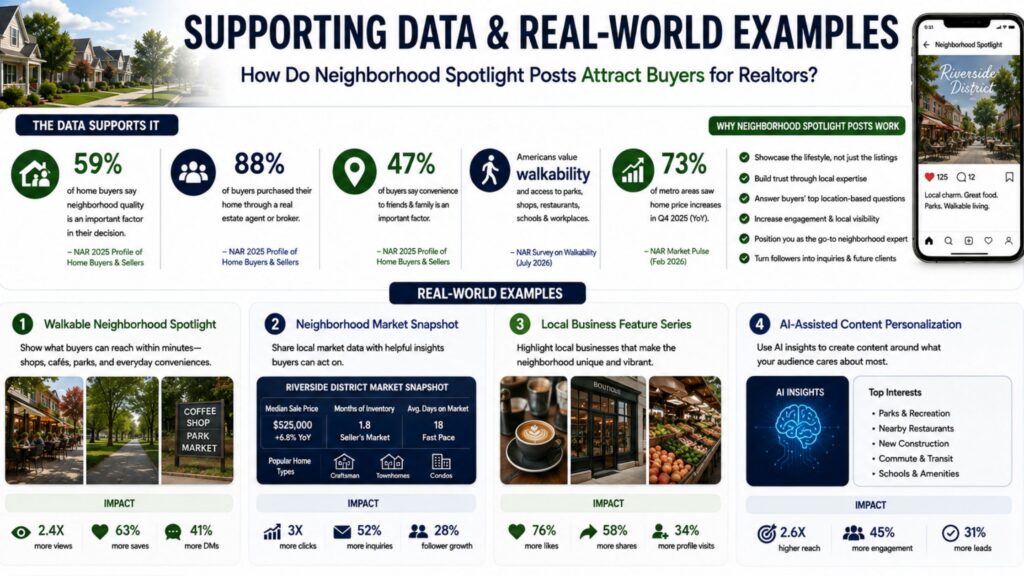
Example 1: Walkable Neighborhood Spotlight
A realtor creates a short video titled:
“What Can You Reach Within 10 Minutes in This Neighborhood?”
The reel shows cafés, restaurants, green spaces, shopping, and other nearby destinations.
Instead of simply promoting a home, the realtor sells the convenience surrounding it.
A buyer interested in that lifestyle now has a reason to ask about available properties.
Example 2: Neighborhood Market Snapshot
A realtor publishes a monthly carousel featuring a particular neighborhood.
It includes recent market data, common housing types, current inventory, and examples of nearby amenities.
The combination of lifestyle and market information positions the agent as someone who understands both the experience and economics of purchasing there.
Example 3: Local Business Series
Every Friday, a realtor features one independent business from a target neighborhood.
Over time, the series builds a library of local content.
When prospective buyers research the community, they discover multiple useful posts from the same realtor.
That repeated exposure can strengthen familiarity long before the first inquiry.
Example 4: AI-Assisted Content Personalization
A realtor reviews engagement data and finds that posts about parks and walkability attract one audience segment while posts about new construction attract another.
AI helps organize those patterns and develop separate content themes.
McKinsey notes that AI-driven personalization can help marketers create highly relevant messaging at greater scale.
Instead of publishing the same generic neighborhood overview repeatedly, the realtor develops spotlights around distinct buyer interests.
Turning Neighborhood Content Into a Repeatable Lead Strategy
One neighborhood post may generate engagement.
A consistent series creates positioning.
Realtors can rotate formats such as neighborhood walkthroughs, local business features, market snapshots, weekend guides, property tours, and “three things to know” videos.
That variety allows the same neighborhood to be covered repeatedly without publishing duplicate content.
It also creates natural opportunities for internal linking. A neighborhood spotlight article can link to the realtor’s buyer services page, current listings, relocation resources, or a related local market update.
For broader guidance on building a consistent real estate social strategy, resources from Socinova can also help connect neighborhood-focused content with a larger social media marketing plan.
Conclusion
Neighborhood spotlight posts attract buyers because real estate decisions involve much more than choosing a property.
Buyers are choosing a location, routine, community, and lifestyle.
NAR’s finding that 59% of buyers consider neighborhood quality an important factor demonstrates why location-focused content deserves a deliberate place in a realtor’s marketing strategy.
Effective neighborhood posts combine local knowledge, visual storytelling, market information, buyer questions, local businesses, and useful calls-to-action.
AI can make the process more efficient by helping identify audience interests and scale content creation, but successful neighborhood marketing still depends on accurate, firsthand local expertise.
For realtors, that is the real advantage of neighborhood spotlight content.
Instead of waiting until a buyer asks, “What is this area actually like?”, the content answers that question first and gives the buyer a reason to start the conversation.